


Introduction: The Clinical Standard of Care
As global orthopedic practices continue shifting toward conservative management, hyaluronic acid for joints therapy has become a primary intervention for knee osteoarthritis. More than 528 million people worldwide are affected by osteoarthritis, making it one of the leading causes of disability among adults aged 45 and older . With the growing aging population, rising obesity rates, and increasing incidence of sports-related joint injuries, the demand for effective viscosupplement injection therapies continues to grow.
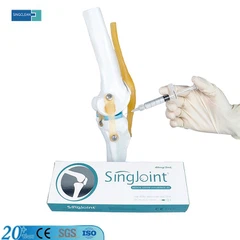
Whether you are a distributor providing hyaluronic acid injectable gel or a clinic offering joint fluid replacement therapy, patient safety remains the highest priority. This guide outlines the safety profile, contraindications, and rehabilitation protocols essential for successful clinical outcomes, with specific reference to high-quality products like SingJoint® Medical Sodium Hyaluronate Gel.
1. The Safety Architecture of HA Therapies
1.1 Understanding the Biological Mechanism
Modern hyaluronic acid for knee treatment is recognized for its minimal systemic footprint. Hyaluronic acid (HA) is a natural mucopolysaccharide in synovial fluid and is the major and most important component responsible for maintaining the fluid's viscoelastic properties . Unlike corticosteroids, which may have localized catabolic effects on articular tissue, high-purity hyaluronic acid in knee joint formulations provide a protective, viscoelastic shield.
When clinicians select hyaluronic acid for the knee, they are choosing a therapy that mimics the natural synovial fluid, providing hyaluronic acid joint lubrication that dampens mechanical impact. The therapeutic effectiveness originates from both physical and biological mechanisms:
Immediate biomechanical support: The exogenous HA disperses throughout the synovial cavity and immediately improves lubrication and cushioning functions
Longer-term biological benefits: Exogenous HA can enhance chondrocyte HA synthesis, prevent cartilage degradation, and promote its regeneration. Moreover, it can reduce the production of proinflammatory mediators and matrix metalloproteinases involved in OA pathogenesis
1.2 Safety Profile and Adverse Events
While adverse events are rare, understanding the adverse event profile is vital. According to clinical data for SingJoint®:
Common (mild and transient) adverse reactions:
Mild local pain at injection site
Temporary swelling or redness
Arthralgia (joint pain)
Joint stiffness
These symptoms are generally mild and transient, usually resolving within 2 to 7 days without medical intervention . By utilizing ultra-pure, non-animal-derived HA, clinics can virtually eliminate immunogenic flare-ups, ensuring that hyaluronic acid in the knee remains a safe, reproducible, and highly effective treatment option.
Quality matters: The incidence of adverse events is significantly influenced by product quality. SingJoint® is manufactured using advanced bacterial fermentation technology (non-animal sourced), ensuring:
No animal protein residues
No immunogenic risks associated with avian sources
Superior batch-to-batch consistency
Enhanced purity and safety profile
Excellent biodegradability and biocompatibility
2. Understanding Contraindications and Patient Selection
Strict aseptic technique must be followed to prevent cross-infection
The pre-filled syringe is intended for single use only. Discard any remaining product; secondary use may lead to infectious diseases
Do not use if the blister package is damaged, or if any cracks or breakage appear on the pre-filled syringe
Do not inject into blood vessels
Do not inject outside the joint cavity or into the synovial tissue or capsule
Do not use disinfectants containing quaternary ammonium salts (e.g., benzalkonium chloride) simultaneously for skin preparation, as sodium hyaluronate may precipitate
3. Standardized Post-Injection Rehabilitation Protocols
To ensure the long-term success of an injection in knee cartilage procedure, clinicians must provide comprehensive post-injection care. This is critical for patients relying on hyaluronic acid lubricant in joints for mobility.
3.1 Phase 1: 0-48 Hours Post-Injection
Key Principles: Protection and Integration
Avoid weight-bearing activities
The hyaluronic acid injectable gel requires time to integrate into the synovial space
Cryotherapy (ice packs) is recommended to manage minor site inflammation
Rest for 12-24 hours after the procedure is advised
Avoid strenuous activity such as jogging, soccer, tennis, heavy lifting, or standing on your feet for a long time
Clinical Note: Do not strain the knee joint for two days after receiving hyaluronic acid injection . During this period, the synovial gel injection is stabilizing within the joint space.
3.2 Phase 2: Days 3-7 Post-Injection
Key Principles: Gradual Return to Function
This is when the synovial gel injection begins to provide the most significant relief
Low-impact exercises can help regain mobility in the affected joint
Patients may begin gentle range-of-motion exercises
Monitor for persistent pain or swelling-if symptoms persist or worsen, consult the treating physician
3.3 Phase 3: Weeks 2+ Post-Injection
Key Principles: Strengthening and Long-Term Maintenance
Focus on muscular strengthening-stronger quadriceps and hamstrings will protect the knee
Physical therapy may be recommended to build supporting musculature
This phase significantly extends the therapeutic lifespan of the joint fluid replacement therapy
Expected Duration of Relief: With SingJoint® products, patients can expect:
SingJoint® (10mg/ml or 12mg/ml): Up to 6 months long-lasting pain relief (series of 3 or 4 injections)
SingJoint® Plus (20mg/ml): More than 6 months long-lasting pain relief (single injection regimen)
4. Product Quality: The Foundation of Safety
For medical device distributors, the quality of the hyaluronic acid for knee product is the most significant factor in patient safety.
4.1 Key Quality Parameters of SingJoint®
| Parameter | SingJoint® | SingJoint® Plus | Clinical Significance |
|---|---|---|---|
| HA Concentration | 10mg/ml or 12mg/ml | 20mg/ml | Higher concentration creates stronger viscoelastic environment |
| Molecular Weight | ≥1.0M Daltons | ≥1.6M Daltons | Higher MW correlates with longer degradation time |
| Osmolality | 313 mOsm/kg | 313 mOsm/kg | Closely matches human body (superior biocompatibility) |
| Kinetic Viscosity | 1,022,000 mPa·s | 1,022,000 mPa·s | 5-10 times higher than competing products |
| Source | Bio-fermentation | Bio-fermentation | Non-animal sourced, no immunogenic risk |
| Administration | 3-4 injections | Single injection | Flexibility for patient preference |
4.2 Superior Product Characteristics
Higher Concentration, Stronger Support: SingJoint's hyaluronic acid has a concentration significantly higher than many competing products. The higher concentration creates a high-viscosity environment that more closely replicates healthy joint function.
Better Biocompatibility for a Comfortable Experience: With an osmolality of 313 mOsm/kg closely matching that of the human body, SingJoint® offers superior biocompatibility. This means minimal discomfort during injection and smoother integration for natural-feeling relief.
Longer-Lasting Performance: SingJoint's kinetic viscosity is 5 to 10 times that of competing products, and its viscosity-average molecular weight is nearly double that of competing products. These key indicators mean that SingJoint takes longer to degrade, extending the effectiveness of every injection. A single injection of SingJoint® delivers efficacy that lasts for up to 6 months, significantly longer than many competing products (which may last only 3-4 months).

5. Q&A: Addressing Common Clinical Concerns
Q: Is there a risk of systemic reaction with hyaluronic acid in the knee?
A: No. Because HA is a naturally occurring biopolymer, it does not interfere with systemic pharmacological pathways, making it a safe choice for elderly patients or those on concurrent medications. The safety profile of HA injections is well-established, with adverse events being primarily local and transient .
Q: How does hyaluronic acid joint lubrication differ from physical therapy?
A: They are complementary. While physical therapy builds muscular support, joint relief hyaluronic acid provides the immediate mechanical cushion required to allow that physical therapy to occur pain-free. HA mechanically lubricates the joints to protect them from loads and impacts and restores the fluidity of synovial fluid .
Q: How long does the effect of SingJoint® last?
A: Depending on the formulation used and patient condition, SingJoint® may provide pain relief for up to 6 months or longer. SingJoint® Plus is specifically designed to deliver long-lasting efficacy with a single injection regimen.
Q: What makes SingJoint® different from other orthopedic gel injections?
A: Compared with many competing products, SingJoint® offers:
Higher HA concentration (approximately 102% higher than some competing brands)
Higher molecular weight (nearly double that of competing products)
Better physiological osmolality (313 mOsm/kg vs. 326-328 mOsm/kg in competitors)
Longer-lasting efficacy (up to 6+ months)
Excellent biocompatibility through non-animal sourced bio-fermentation technology
Q: Are intra-articular hyaluronic acid injections safe?
A: When administered by trained healthcare professionals using aseptic techniques, intra-articular hyaluronic acid injections are generally considered safe and well tolerated . Temporary injection-site discomfort or swelling may occasionally occur and typically resolves within a few days. Clinical guidelines from various international organizations have provided conditional recommendations for the use of HA in specific patient populations .
Q: What precautions should patients take after injection?
A: Patients should:
Avoid weight-bearing activities for 48 hours
Use cryotherapy to manage minor inflammation
Avoid strenuous activities such as jogging, soccer, and heavy lifting
Consult their physician if pain or swelling persists or worsens
6. Conclusion
hyaluronic acid for joints therapy, when properly administered with high-quality products like SingJoint®, offers a safe and effective treatment option for patients with knee osteoarthritis. By understanding the comprehensive safety profile, carefully screening patients against contraindications, and following standardized post-injection protocols, clinicians can maximize therapeutic outcomes while minimizing risks.
For distributors and healthcare procurement professionals, choosing a manufacturing partner with proven quality standards-such as Singclean Medical's ISO 13485 certification, CE marking, and established global presence in 90+ countries-is essential for ensuring patient safety and treatment efficacy.
References
Mayo Clinic. Hyaluronic acid (injection route) - Side effects & uses. 2026.
Dr. Joseph Mitchell, Orthopedic Surgeon. Hyaluronic Acid Injections - Post-Injection Care.
Singclean Medical. SingJoint® Medical Sodium Hyaluronate Gel Product Information. 2025.
BMC Musculoskeletal Disorders. Comparison of hyaluronic acid and platelet-rich plasma in knee osteoarthritis: a systematic review. 2025.
Australian Prescriber. Intra-articular hyaluronic acid (viscosupplementation) for osteoarthritis: is it effective? 2026.
Orthopedic Reviews. Viscosupplementation for chronic knee pain secondary to Osteoarthritis. 2021.