


The global demand for gel in knee injections continues to rise as healthcare systems seek effective non-surgical treatments for osteoarthritis (OA). According to Singclean's product materials, the global viscosupplementation market was valued at over USD 3.38 billion in 2020 and is projected to reach USD 6.78 billion by 2028, driven by aging populations, increasing osteoarthritis prevalence, advances in hyaluronic acid therapies, and growing demand for joint-preserving treatments.
For medical distributors and procurement managers, this trend represents a significant business opportunity. However, selecting the right sodium hyaluronate injection involves much more than comparing prices. Product performance, manufacturing quality, clinical evidence, regulatory compliance, and long-term supply capability all influence purchasing decisions.
This guide outlines the key factors distributors should evaluate before choosing a viscosupplementation partner.
Why Demand for Knee Injections Continues to Grow
Osteoarthritis remains one of the leading causes of chronic pain and disability worldwide. As articular cartilage gradually degenerates, the concentration and molecular weight of hyaluronic acid within synovial fluid decrease, reducing the joint's natural lubrication and shock absorption capabilities. This process contributes to pain, stiffness, swelling, and limited mobility.
Several factors continue to drive demand for knee injections and synovial injections:
Aging populations worldwide
Increasing obesity rates
Sports-related joint injuries
Rising preference for minimally invasive treatment
Growing demand to delay total knee replacement surgery
For hospitals and orthopedic clinics, injections in the knee for pain have become an important option between conservative therapies and joint replacement surgery, particularly for patients with mild-to-moderate knee osteoarthritis.
What Makes an Effective Sodium Hyaluronate Injection?
Not all viscosupplement products provide the same therapeutic performance. Procurement teams should focus on several technical indicators that directly influence clinical outcomes and patient satisfaction.
1. Molecular Weight Matters
Among all product specifications, molecular weight is one of the most important.
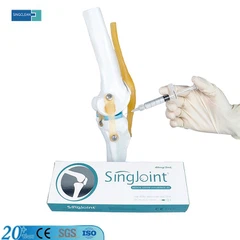
Healthy synovial fluid naturally contains high-molecular-weight hyaluronic acid, providing excellent viscoelasticity and lubrication. According to the SingJoint® product information, exogenous hyaluronic acid with an appropriate molecular weight can bind more effectively to synovial fibroblast receptors, stimulating endogenous hyaluronic acid synthesis and improving joint lubrication.
When evaluating suppliers, distributors should consider whether the product offers:
High molecular weight for improved viscoelasticity
Better resistance to degradation
Longer residence time inside the joint
Longer-lasting symptom relief
For example, SingJoint® Plus uses a molecular weight of ≥1.6 MDa, while the standard SingJoint® formulation provides ≥1.0 MDa, allowing distributors to select products for different clinical requirements.
2. Hyaluronic Acid Concentration
HA concentration directly influences the viscosity and lubricating performance of gel in knee injections.
Generally speaking, higher concentrations create a more viscous environment that more closely resembles healthy synovial fluid, helping reduce friction between articular surfaces.
SingJoint® offers multiple formulations ranging from 10 mg/mL and 12 mg/mL for multi-injection therapy to 20 mg/mL for single-injection treatment, enabling distributors to meet different market demands.
3. Viscosity Determines Mechanical Protection
Viscosity is often overlooked during procurement, yet it plays a major role in treatment performance.
A higher-viscosity sodium hyaluronate injection provides:
Better lubrication
Improved shock absorption
Enhanced mechanical protection
Longer retention within the joint cavity
According to the product comparison in the SingJoint® brochure, SingJoint® demonstrates a substantially higher kinetic viscosity than the referenced comparison products, supporting extended durability after injection.
4. Source of Hyaluronic Acid
Another important purchasing consideration is the production method.
Modern viscosupplementation products increasingly rely on bio-fermentation rather than animal-derived raw materials.
Bio-fermentation offers several advantages:
Excellent biocompatibility
Reduced immunogenicity
Consistent manufacturing quality
Better regulatory acceptance
SingJoint® is manufactured using non-animal-sourced hyaluronic acid produced through bio-fermentation, meeting European Pharmacopoeia standards according to the product documentation.
Single Injection vs. Multiple Knee Injections
Different healthcare markets have different treatment preferences. Some physicians favor convenience, while others prioritize lower per-treatment costs.
| Comparison | Multi-Injection Therapy | Single-Injection Therapy |
|---|---|---|
| Treatment Schedule | 3–4 weekly injections | One injection |
| Patient Visits | Multiple | Single |
| Patient Compliance | Moderate | High |
| Recovery Convenience | Standard | Excellent |
| Typical Use | Cost-sensitive markets | Premium markets |
According to the SingJoint® product portfolio:

SingJoint®
SingJoint® is available in 10 mg/mL and 12 mg/mL formulations, administered once weekly for three to four consecutive weeks, with symptom relief lasting up to six months.
SingJoint® Plus features a 20 mg/mL formulation designed for a single injection regimen, with reported pain relief extending beyond six months.

Offering both treatment options enables distributors to serve hospitals, orthopedic clinics, and physicians with different clinical preferences and reimbursement models.
Key Questions Every Distributor Should Ask Before Selecting a Supplier
Before introducing a new viscosupplement injection into your product portfolio, consider the following questions:
Is the product CE certified?
Regulatory certification remains one of the primary requirements for international tenders and hospital procurement.
Is the hyaluronic acid produced through bio-fermentation?
Non-animal-sourced HA generally offers improved consistency and safety.
What is the molecular weight?
Higher molecular weight formulations typically provide superior viscoelastic performance.
How long does symptom relief last?
Products with longer duration may reduce repeat injections and improve patient compliance.
Does the manufacturer provide OEM and regulatory support?
Many distributors require customized branding, documentation, and registration assistance to enter new markets efficiently.
Why More Distributors Are Choosing High-Performance Viscosupplementation Products
Today's orthopedic procurement decisions extend beyond pricing. Distributors increasingly prioritize products that combine clinical performance with manufacturing reliability.
Based on the SingJoint® product information, its key advantages include:
Bio-fermentation-derived sodium hyaluronate
Multiple concentration options
High molecular weight formulations
Excellent biocompatibility
CE certification
Single- and multi-injection treatment options
Long-lasting pain relief of approximately six months or longer depending on the formulation
Distribution across more than 90 countries and regions
For distributors seeking to build a sustainable orthopedic product portfolio, these characteristics contribute to stronger competitiveness in both public tenders and private healthcare markets.
Procurement Checklist Before Importing Knee Injection Products
Before selecting a supplier, ensure the following criteria are carefully evaluated:
CE certification and regulatory documentation
Bio-fermentation manufacturing process
Molecular weight specifications
Hyaluronic acid concentration
Injection regimen options
Clinical evidence and published studies
Manufacturing quality system
OEM/Private Label capability
Stable global supply capacity
Technical and registration support
Using a structured evaluation framework can reduce procurement risks while improving long-term customer satisfaction.
Conclusion
As the global burden of osteoarthritis continues to increase, demand for gel in knee injections, synovial injections, and sodium hyaluronate injection products is expected to grow steadily. For distributors and procurement managers, choosing the right viscosupplement is no longer simply about product cost-it requires balancing clinical performance, manufacturing quality, regulatory compliance, and supply reliability.
By evaluating factors such as molecular weight, viscosity, HA concentration, injection regimen, and manufacturer capabilities, distributors can build a competitive orthopedic portfolio that meets evolving market needs while delivering long-term value to healthcare providers and patients.

Looking for a Reliable Sodium Hyaluronate Injection Manufacturer?
Singclean has over two decades of experience in the development and manufacturing of hyaluronic acid medical devices. The SingJoint® portfolio includes both multi-injection and single-injection viscosupplementation solutions manufactured with bio-fermentation-derived hyaluronic acid and CE-certified quality standards.
Whether you are expanding your orthopedic product line, seeking an OEM partner, or evaluating new distribution opportunities, our technical team can provide comprehensive product documentation, regulatory support, and customized cooperation solutions.
Contact Singclean today to request product specifications, OEM information, clinical documentation, or distributor partnership details.