


Introduction: The Global Burden of Knee OA and the Rise of Viscosupplementation
The global healthcare sector faces an unprecedented surge in knee osteoarthritis cases, driven by an aging population and rising incidence of sports-related joint injuries. According to the World Health Organization, approximately 528 million people worldwide were living with osteoarthritis in 2019, with 73% of those affected aged 55 years and older. The Institute for Health Metrics and Evaluation projects that by 2050, knee osteoarthritis alone is expected to increase by 75%, underscoring an urgent need for scalable and cost-effective interventions.
Against this backdrop, viscosupplementation-the intra-articular injection of hyaluronic acid (HA)-has emerged as a premier non-surgical standard of care. The global viscosupplementation market was valued at approximately USD 3.20 billion in 2025, with projections reaching USD 4.94 billion by 2032 at a CAGR of 6.37%. Other market estimates indicate a broader range, placing 2025 market size between USD 4.50 billion and USD 4.55 billion. This growth trajectory is driven by multiple converging factors: the rising prevalence of OA, increasing geriatric populations, advancements in HA-based therapies, and a growing preference for minimally invasive, outpatient orthopedic procedures.
For orthopedic networks, hospitals, and medical device distributors, managing this chronic condition demands interventions that are clinically validated, operationally efficient, and backed by rigorous quality standards. This comprehensive technical whitepaper bridges the gap between clinical science and global procurement, analyzing definitive patient outcomes, establishing standardized injection protocols, and providing a rigorous framework for international OEM and wholesale sourcing.

Clinical Taxonomy: Mechanism of Action and Clinical Classification
To build a successful product portfolio in the joint care market, procurement officers and distributors must understand the precise mechanism by which viscosupplementation exerts its therapeutic effect.
Hyaluronic acid is the most important component of synovial fluid-a natural mucopolysaccharide responsible for the fluid's high viscoelasticity, lubricity, and shock-absorbing capacity. In osteoarthritic joints, the concentration and molecular weight of endogenous HA decline significantly as the synovial fluid breaks down under pathological conditions. This degradation leads to increased joint friction, cartilage wear, and progressive pain and stiffness.
viscosupplementation injections works through a three-tiered mechanism:
Mechanical Restoration. Exogenous HA is injected directly into the joint capsule, restoring the viscoelastic properties of synovial fluid and providing immediate lubrication and shock absorption. Research by Migliore & Procopio (2015) confirms that exogenous HA can enhance chondrocyte HA synthesis, prevent cartilage degradation, and reduce the production of proinflammatory mediators and matrix metalloproteinases involved in OA pathogenesis.
Biological Modulation. Beyond mechanical effects, HA exerts anti-inflammatory and chondroprotective benefits. The reintroduction of high-purity HA into the joint space inhibits inflammatory pathways and promotes a healing environment for articular cartilage.
Endogenous Stimulation. Exogenous HA-particularly with intermediate to high molecular weight-binds to receptors on synovial fibroblasts, stimulating the body's own production of high-molecular-weight HA (Smith & Ghosh, 1987), creating a positive feedback loop for long-term joint health.
This localized therapeutic approach does not rely on systemic pharmacological pathways, making it a patient-friendly alternative to chronic oral NSAID consumption or repeated corticosteroid injections, which carry documented risks of accelerated cartilage toxicity when used long-term.
Market Differentiation: High-Performance Viscosupplements for Knee Care
The international medical marketplace offers various HA formulations, and selecting premium viscosupplements for knee therapies requires a thorough understanding of polymer chemistry and rheology. Manufacturers primarily categorize these devices into non-crosslinked sodium hyaluronate and crosslinked sodium hyaluronate.
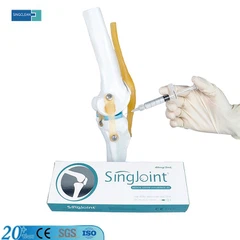
Non-crosslinked Sodium Hyaluronate Formulations. These options closely mimic the molecular weight of natural youthful synovial fluid. A standard course requires a weekly visco supplement injection for knee stabilization over 3 to 4 consecutive weeks. This sequential approach gradually builds up the polymer network within the joint capsule, making it highly effective for mild-to-moderate Kellgren-Lawrence (KL) Grade II and III OA cases. For example, Singjoint non-crosslinked viscosupplementation injection (10mg/ml or 12mg/ml) is for 3-4 injections treatment course for up to 6 months duration.

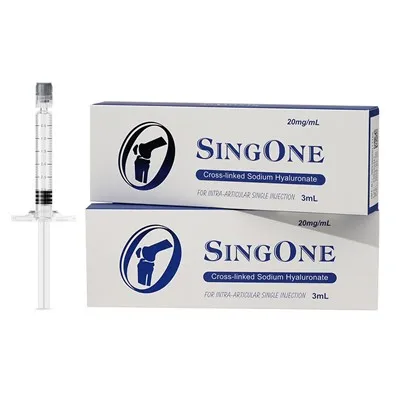
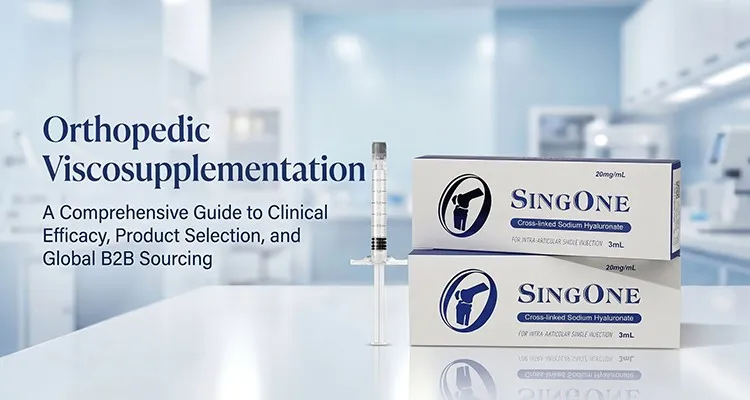
Single-Injection High-Concentration Formulations. An increasing number of products now offer single-injection regimens with HA concentrations of 20 mg/ml or higher. These high-concentration formulations are designed to provide therapeutic equivalence to multi-injection courses with improved patient convenience and compliance. Like SingOne crosslinked viscosupplementation injection is for one shots to last more than 6 months duration.
Molecular Weight Matters. The clinical literature establishes that molecular weight directly influences therapeutic efficacy. HA with molecular weight below 500,000 Da exhibits low receptor binding affinity, failing to stimulate endogenous HA biosynthesis. Optimal efficacy occurs in the range of 500,000 Da to 4,000,000 Da, where high receptor affinity drives optimum stimulation of biosynthesis. Excessive molecular weight above 4,000,000 Da introduces steric volume limitations that reduce binding efficiency.
Quantitative Clinical Efficacy
Real-World Clinical Data. Product-specific clinical research corroborates these findings. A study involving 300 OA patients conducted at First Affiliated Hospital of Zhejiang Chinese Medical University and Tongde Hospital of Zhejiang Province demonstrated that SingJoint® viscosupplement injection relieved OA knee pain for up to 6 months, with average effectiveness rates of 99.33% for high-concentration (20 mg/ml) formulations and 99.00% for standard (10 mg/ml) formulations. No serious adverse events were reported in these clinical evaluations.
Surgical Delay. Viscosupplementation has been shown to delay the need for total knee replacement surgery in many patients, offering both clinical and economic value. By preserving joint function and reducing pain, these therapies help patients avoid or postpone invasive surgical interventions, reducing healthcare system burden and improving patient quality of life.
Viscosupplements for Knee Protocols: Clinical Best Practices
To ensure that a premium viscosupplement achieves its maximum clinical potential, healthcare networks must enforce precise intra-articular injection protocols. Distributors should educate downstream orthopedic networks on the following clinical steps:
Patient Selection. Viscosupplementation yields the highest success rates in Kellgren-Lawrence Grade II and Grade III osteoarthritis. Advanced, bone-on-bone Grade IV cases may present diminished responses due to the total structural collapse of the joint space.
Pre-Procedural Assessment. Prior to administration, the knee must be assessed for joint effusion (fluid retention). If excessive fluid is present, the clinician must aspirate the inflammatory fluid using a sterile gauge needle before initiating the injection. Failing to do so will dilute the hydrogel, reducing its viscosity and clinical performance.
Injection Technique. Modern protocols strongly support ultrasound-guided deployment over blind anatomical landmark placement. Real-time visualization ensures accurate placement of the gel directly within the synovial cavity, completely avoiding accidental deposition into extra-articular soft tissues or fat pads. Each injection takes a few minutes and can be performed in an outpatient setting, but aseptic injection procedures must be strictly followed.
Post-Injection Management. Patients can resume normal day-to-day activities immediately after injection but should avoid excessive activities for approximately 48 hours. Some patients may experience mild transient local pain, swelling, or joint stiffness at the injection site, which typically resolves within 2 to 7 days without medical intervention.
B2B Sourcing Framework: Four Non-Negotiable Criteria for International Distributors
The global supply chain features a wide array of manufacturing standards. Sourcing an inferior product line exposes international medical device distributors to severe regulatory liabilities and clinical product recalls. When vetting a long-term contract manufacturing or wholesale viscosupplementation with hyaluronic acid partner, procurement officers must audit four non-negotiable criteria:
① Biocompatibility & Source Origin. The active sodium hyaluronate must be sourced via advanced bacterial fermentation (non-animal origin). This completely removes the risk of avian protein contamination and cross-species viral transmission, drastically lowering the clinical incidence of post-injection acute inflammatory flare-ups. Fermentation-derived HA from Streptococcus zooepidemicus provides superior batch-to-batch consistency and uniform molecular weight distribution.
② Endotoxin Control & Purity. The purification infrastructure must deliver ultra-low endotoxin thresholds. Premier manufacturing standards maintain endotoxin levels strictly below 0.5 EU/mg, protecting patients from immunogenic pseudo-sepsis. HA purity should reach ≥99% to ensure predictable clinical efficacy.
③ Sterilization & Quality Systems. Every syringe must undergo terminal moist heat sterilization within its final packaging. This process must be carefully validated to achieve a Sterility Assurance Level (SAL) of 10⁻⁶ without cleaving polymer chains or disrupting the gel's physical stability. Manufacturers must hold ISO 13485:2016 certification and comply with applicable country-specific regulatory requirements.
④ Supply Chain Reliability & Traceability. Distributors should evaluate on-time delivery rates, batch traceability protocols, and production capacity. Premier manufacturing partners provide Certificates of Analysis (CoA) for each production batch, detailing sterility, endotoxin levels, molecular weight, and viscosity profiles.
Global Regulatory Compliance: Technical Documentation Requirements
Successfully registering Class III medical devices requires comprehensive technical and legal support from the manufacturer. Sourcing teams must ensure the factory provides an audit-ready compliance dossier that includes:
CE Mark under EU Medical Device Regulation (MDR). Valid Class III medical device certificate demonstrating compliance with European regulatory standards.
ISO 13485:2016 Certification. Baseline quality management system demonstrating adherence to international medical device manufacturing standards.
Technical Dossiers (TDF) & Free Sale Certificates (FSC). Complete documentation packages for local Ministry of Health (MoH) registrations, including clinical evaluation reports and stability studies.
Additional Market-Specific Approvals. Certifications from regulatory bodies such as ANVISA (Brazil), FDA (USA-where applicable), and others based on target market requirements.
A premier manufacturing partner provides full regulatory transparency, actively assisting partners in passing local MoH registrations. This comprehensive support drastically reduces time-to-market, allowing distributors to quickly establish a dominant commercial position in their regional orthopedic sectors.
Conclusion: Securing Sourcing Excellence in Joint Care
The commercial success of an orthopedic product line rests on three pillars: absolute manufacturing consistency, rigorous regulatory compliance, and clinically validated efficacy. From the purity of the polymer inside the bioreactor to the precision of the clinician's delivery, every link in the supply chain matters.
For international distributors, brand owners, and procurement organizations, aligning with an ISO 13485-certified, technologically advanced manufacturing facility is not merely a competitive advantage-it is a clinical and commercial necessity. As the global burden of osteoarthritis continues to rise and the viscosupplementation market expands toward an estimated USD 4.94 billion by 2032, the window of opportunity for distributors to capture market share in the joint care sector has never been more favorable.
Choose partners who deliver science-backed efficacy, regulatory transparency, and reliable supply chain performance. In orthopedic viscosupplementation, excellence is not an option-it is the standard.
FAQ
Q: Why is bacterial fermentation preferred over avian extraction for wholesale sourcing?
A: Bacterial fermentation utilizing Streptococcus zooepidemicus provides superior batch-to-batch consistency and uniform molecular weight distribution. More importantly, it eliminates avian tissue proteins, ensuring that imported products maintain an exemplary clinical safety record with virtually zero reportable injection-site allergies. Non-animal sourced HA also eliminates the risk of cross-species viral transmission.
Q: What are the shelf-life and storage conditions for these HA formulations?
A: Advanced linear sodium hyaluronate formulations maintain exceptional physical and rheological stability for up to 24 months when stored between 2°C and 20°C, protected from light. They do not require cold-chain logistics during standard transit, which significantly minimizes shipping, warehousing, and operational overhead for international logistics networks.
Q: Can we request custom box art and multi-lingual instruction leaflets for our local market?
A: Yes. Complete turnkey OEM/OBL (Own Brand Labeling) services include comprehensive design integration. Top-tier manufacturers provide high-definition, localized packaging compliance, including multi-lingual Instructions for Use (IFU) documents that satisfy specific regional regulatory mandates. Customization options also include tailored concentration levels (1.0% to 2.5%), molecular weight profiles, and syringe fill volumes (1.0 ml, 2.0 ml, 2.5 ml, 3.0 ml).
Q: What payment terms are available for international B2B transactions?
A: Standard payment terms include T/T (Telegraphic Transfer), L/C (Letter of Credit), and other mutually agreed methods for established distributor relationships.