


For patients suffering from knee osteoarthritis (OA), one of the most common questions is: "How long do hyaluronic knee injections last?"
As viscosupplementation becomes a mainstream, non-surgical treatment option, understanding its duration of effect, influencing factors, and clinical value is essential-not only for patients, but also for medical distributors and healthcare providers aiming to position high-quality products in a competitive market.
What Are Hyaluronic Knee Injections?
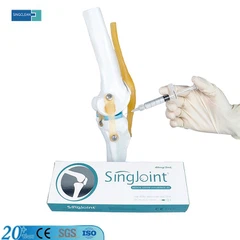
Hyaluronic knee injections refer to intra-articular injections of sodium hyaluronate (HA), a naturally occurring component of synovial fluid.
Their primary purpose is to:
Restore joint lubrication
Improve shock absorption
Reduce inflammation
Enhance mobility
In osteoarthritic joints, the concentration and molecular weight of HA decrease, leading to pain and stiffness. HA injections work by replenishing and enhancing the synovial environment.
How Long Do Hyaluronic Knee Injections Last?
Average Duration: 4 to 6 Months (or Longer)
Clinical data and product performance insights indicate that:
Most patients experience pain relief for 4–6 months
High-quality formulations can provide ≥6 months of sustained efficacy
Some patients may benefit for even longer depending on disease severity and product characteristics
According to the provided clinical materials, a single high-concentration injection can deliver pain relief lasting over 6 months, while multi-injection regimens also achieve comparable long-term outcomes.
Why Do Hyaluronic Injections Last This Long?
The duration is driven by both mechanical and biological mechanisms:
1. High Viscoelasticity
HA restores the viscosity and elasticity of synovial fluid, enabling:
Long-lasting lubrication
Sustained shock absorption under mechanical stress
2. Molecular Weight and Concentration
Higher molecular weight (≥1.0–1.8M Daltons) slows degradation
Higher concentration creates a more stable intra-articular environment
This leads to extended residence time in the joint cavity and prolonged therapeutic effect.

3. Biological Stimulation
Exogenous HA:
Stimulates endogenous HA production
Enhances chondrocyte activity
Reduces inflammatory mediators
This means the benefit continues even after the injected HA begins to degrade.
4. Barrier and Protective Function
HA forms a protective coating over cartilage surfaces, which:
Reduces friction
Prevents further cartilage damage
Maintains joint homeostasis over time
Single Injection vs Multiple Injection: Which Lasts Longer?
| Regimen Type | Typical Duration | Key Advantage |
|---|---|---|
| Single Injection (High Concentration) | ≥6 months | Faster relief, higher compliance |
| 3–4 Injection Series | 4–6 months | Gradual improvement, cost flexibility |
Clinical insights show that both regimens can achieve long-term pain relief, but high-concentration single injections often provide faster onset and extended duration.
Factors That Influence Duration
Not all patients experience the same results. Duration depends on:
1. Stage of Osteoarthritis
Mild to moderate OA → longer-lasting results
Advanced OA → reduced duration
2. Product Quality
HA concentration
Molecular weight
Purity and biocompatibility
Higher-quality formulations degrade more slowly and perform better clinically.
3. Patient Characteristics
Age
Body weight
Activity level
Joint alignment
For example, excessive mechanical load (e.g., obesity) may shorten duration.
4. Injection Technique
Accurate intra-articular placement
Clinical expertise
Proper administration ensures optimal distribution and efficacy.
Can Hyaluronic Knee Injections Be Repeated?
Yes. One of the key advantages of HA injections is their repeatability:
Typically administered every 6–12 months
Safe for long-term management when clinically indicated
Supports ongoing symptom control without systemic side effects
This creates a predictable treatment cycle, which is highly valuable from both clinical and commercial perspectives.
Clinical Value for Distributors and Clinics
Understanding duration is critical for B2B positioning and sales strategy:
1. Strong Patient Retention
Repeat treatment cycles → recurring demand
2. High Perceived Value
Long-lasting relief improves patient satisfaction
3. Competitive Differentiation
Products offering:
Higher viscosity
Longer duration (>6 months)
Better biocompatibility
…are more attractive to clinics and procurement teams.
Market Insight: Why Duration Matters
In the global viscosupplementation market:
Patients increasingly prefer long-lasting, non-surgical treatments
Clinics favor products that reduce treatment frequency
Distributors benefit from repeat purchase models
Regions such as Asia-Pacific and North America dominate current demand, while Europe shows rapid growth potential.
Conclusion
So, how long do hyaluronic knee injections last?
In most cases: 4 to 6 months
With advanced formulations: 6 months or longer
Their long duration is driven by:
High viscoelasticity
Optimal molecular weight and concentration
Biological stimulation of joint repair
For healthcare providers and distributors, hyaluronic acid injections represent a reliable, repeatable, and high-demand solution in osteoarthritis management.
FAQ
1. Do hyaluronic knee injections wear off?
Yes, but effects typically last several months, and treatment can be repeated.
2. What is the longest-lasting knee injection?
High molecular weight, high-concentration HA injections can last over 6 months.
3. How soon can I repeat the injection?
Usually after 6 months, depending on symptoms and physician advice.
4. Do results improve with repeated treatments?
Yes, some patients experience enhanced cumulative benefits.
5. Are longer-lasting injections better?
Generally yes, as they reduce treatment frequency and improve patient compliance.