





Osteoarthritis (OA) is a chronic, degenerative joint disease characterized by progressive cartilage degradation, synovial inflammation, and muscle atrophy around the joint. This condition significantly reduces patients' mobility and quality of life, often resulting in chronic pain and stiffness that interfere with daily activities.

Who Is at Risk for Osteoarthritis?
Osteoarthritis primarily affects middle-aged and elderly individuals, as well as those who are overweight or obese. Its prevalence increases with age and body weight. Women are more likely to develop OA than men, especially after menopause, suggesting that hormonal changes may play a role.
Although the exact cause of OA remains unclear, clinical studies have linked it to several risk factors, including:
Genetic predisposition
Obesity and metabolic disorders
Joint trauma or overuse injuries
Aging and decreased cartilage repair capacity
Chronic inflammation in the joint cavity
Kellgren & Lawrence Classification (K-L Classification)
Clinicians often use the Kellgren & Lawrence (K-L) system to stage the severity of OA based on X-ray findings. The classification helps determine appropriate treatment plans.
| Grade | Radiographic Features | Recommended Treatment |
|---|---|---|
| 0 | Normal joint, no radiographic change | No treatment required |
| I | Doubtful narrowing of joint space; possible mild osteophytes | Basic treatment: health education, physical therapy, and exercise |
| II | Definite osteophytes, but normal joint space | Combination of basic and drug therapy: NSAIDs and intra-articular injections |
| III | Moderate joint space narrowing | Long-term NSAIDs; intra-articular injections of sodium hyaluronate or medical chitosan; possible arthroscopic debridement |
| IV | Severe joint space narrowing, subchondral bone sclerosis |
Joint replacement surgery and medication for symptom control |
Sodium Hyaluronate: A Key Solution for OA Management
Among non-surgical treatments, intra-articular sodium hyaluronate injections have gained wide clinical recognition for their safety and efficacy. Sodium hyaluronate, a key component of synovial fluid, acts as a viscosupplement-restoring the joint's natural lubrication and cushioning function.
Its therapeutic benefits include:
Reducing friction between cartilage surfaces
Improving joint mobility and flexibility
Relieving pain and inflammation
Protecting and nourishing cartilage tissue
Delaying the need for surgical intervention

Why Choose Singjoint® Medical Sodium Hyaluronate?
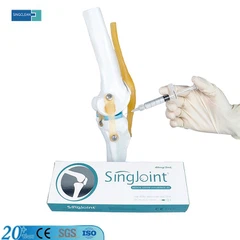
Singjoint® Medical Sodium Hyaluronate for Bone Joint is specifically designed for orthopedic applications. It features:
High-purity, non-animal-origin hyaluronate for superior biocompatibility
Optimized molecular weight to ensure long-lasting joint lubrication
Sterile pre-filled syringes for ease of use and infection prevention
CE-certified quality assurance, meeting international medical standards
By supplementing the natural synovial fluid, Singclean® sodium hyaluronate injections help restore the biomechanical balance of the joint, relieve pain, and improve the patient's quality of life-especially in the early to moderate stages of OA.
Conclusion
Osteoarthritis is a progressive condition that requires early diagnosis and personalized management. As part of a comprehensive, non-surgical treatment plan, sodium hyaluronate injections play a crucial role in pain relief, joint protection, and delaying disease progression.
With clinically validated effectiveness and high-quality manufacturing, Singclean® Medical Sodium Hyaluronate provides healthcare professionals and distributors with a reliable, evidence-based solution for OA therapy.