


Poly‑L‑lactic acid (PLLA) is a biodegradable polymer widely used in medical aesthetics and tissue engineering. Thanks to its biocompatibility, controlled degradation, and ability to stimulate collagen formation, PLLA has become a key ingredient in dermal fillers and skin rejuvenation treatments. This article offers a comprehensive overview of PLLA's applications in medical beauty, its underlying mechanisms, advantages, limitations, and future development trends.
What is PLLA?
PLLA is a stereoisomer of polylactic acid (PLA) - specifically the "L‑lactic" form - known for its higher crystallinity, chemical stability and longer degradation time compared to other forms.
In the aesthetic medicine field, PLLA is used as a bio‐stimulating filler whose mechanism is not merely volume filling but collagen induction.

How Does PLLA Work in Aesthetic Treatments?
2.1 Mechanism of Action
When PLLA microparticles are injected into the deep dermis or subdermal tissue:
Initially, there is a minor volume effect due to suspension vehicle; this may diminish in the first few days.
Over the following weeks to months, the PLLA particles initiate a mild foreign‐body reaction (macrophage and lymphocyte response) which stimulates fibroblasts to proliferate and produce new collagen (especially type I).
As the polymer slowly degrades (hydrolysis into lactic acid, then metabolised), the newly formed collagen matrix continues to provide structural support, giving the treatment its long‐lasting effect.
2.2 Clinical Benefits in Medical Beauty
Skin Rejuvenation & Volume Restoration: By increasing endogenous collagen production, PLLA can improve skin elasticity, smooth wrinkles, and replenish facial volume.
Longevity: Compared to many hyaluronic acid (HA) fillers, PLLA's effect often lasts 12‑24 months (sometimes longer depending on formulation and injection site).
Biodegradability & Safety: As a well‐researched biodegradable polymer, PLLA's gradual resorption reduces long‑term foreign material presence.
Key Applications in Aesthetics
3.1 Dermal Fillers & Skin Laxity
PLLA is injected into areas with volume loss (e.g., cheeks, temples) or skin laxity to stimulate collagen and provide lift. The treatment is especially suitable for patients seeking a gradual, natural improvement over time rather than immediate volumisation.
3.2 Other Emerging Uses
Combined use of PLLA with threads or mesh implants for skin tightening or lower face contouring.
Use as scaffold or implant material in reconstructive settings (though aesthetic is the focus here). Research indicates PLLA's broader biomaterial potential in tissue engineering.
Advantages & Limitations
Advantages
Long‐lasting effect as collagen builds over time.
Good biocompatibility and biodegradability (when properly formulated).
Can appeal to aesthetic patients seeking a more gradual "refresh" than instant filler.
Limitations / Considerations
Results develop gradually - patients must understand that effect accrues over several weeks/months.
Technique sensitivity: uneven injection or incorrect placement may lead to nodules or lumps.
As a biomaterial, materials science matters: polymer size, crystallinity, formulation all affect outcomes.
Because it stimulates collagen rather than immediately filling volume, expectation management is key.

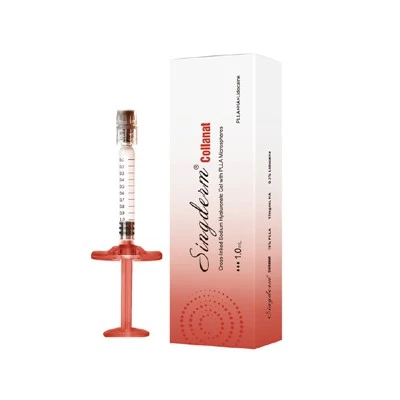
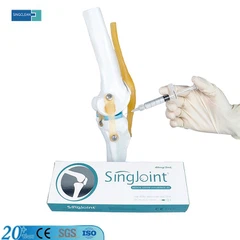
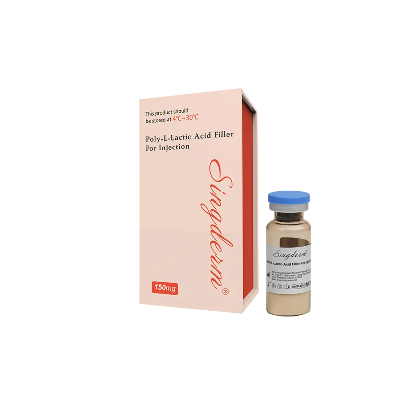
Singderm Injectable PLLA Filler
Future Trends & Market Outlook
With the growing demand for minimally invasive skin rejuvenation, PLLA's role as a "collagen stimulator" makes it increasingly popular in medical aesthetics.
Advances in polymer chemistry and formulation may optimise PLLA's degradation rate, particle size, and safety profile, improving outcomes.
There is potential for combining PLLA with other technologies (e.g., laser treatments, microneedling, bioactive scaffolds) to enhance efficacy.
For a company like yours (specialising in absorbable biomaterials), positioning PLLA‐based aesthetic products (or partnering with aesthetic device manufacturers) could open a high‑growth market segment.