




Hyaluronic Acid for Joints: Mechanism, Clinical Evidence, and Product Advantages for Knee Osteoarthritis Treatment
Osteoarthritis (OA) of the knee is a highly prevalent degenerative joint disease driven by progressive cartilage breakdown and deterioration of synovial fluid quality. As the global burden of OA rises, particularly in aging populations, effective interventions that not only relieve symptoms but also improve joint biomechanics are increasingly sought by orthopedic clinics, distributors, and healthcare professionals.
One such intervention is intra-articular injection of hyaluronic acid (HA)-a therapeutic approach focused on restoring the viscoelastic properties of synovial fluid rather than merely "adding volume." This distinction is critical for understanding how viscosupplementation impacts joint function.

Understanding the Mechanism: Quality Over Quantity
Healthy synovial fluid contains high-molecular-weight HA, which provides essential viscosity and elasticity-properties that cushion mechanical stress, facilitate smooth articulation, and support joint homeostasis. In OA, both the concentration and molecular weight of endogenous HA decrease, leading to reduced viscoelasticity and impaired shock absorption. This degradation is a key contributor to pain, stiffness, and functional loss.
Viscosupplementation with exogenous hyaluronic acid aims to:
Restore synovial fluid elasticity and viscosity, directly addressing the rheological deficits in degenerated joints.
Enhance lubrication and shock-absorbing capacity, reducing shear stress on cartilage surfaces.
Modulate local inflammatory mediators, potentially lowering expression of cytokines and enzymes that drive cartilage breakdown.
Unlike corticosteroids that mitigate inflammation transiently, HA injections aim for durable mechanical and biochemical normalization of joint fluid, yielding sustained symptomatic relief.
Clinical Evidence: What Peer-Reviewed Trials Show
A growing body of randomized controlled trials (RCTs) and observational studies supports the use of intra-articular HA for knee OA:
Efficacy in Pain and Function
In a prospective RCT involving 226 patients, weekly intra-articular injections of 30 mg sodium hyaluronate significantly improved WOMAC pain scores and patient global assessments from Week 7 through Week 27, with 58% of HA-treated patients achieving ≥5-unit pain improvement versus 40% in the saline control group.
An Asian multicenter double-blind trial found that HA (Hyalgan®) resulted in greater reduction in VAS pain scores on walking tests at Week 25 compared with placebo (reduction ~30.85 mm vs ~23.62 mm; p < 0.002). HA also showed statistically greater improvements in WOMAC pain and function scores starting as early as Week 5.
Safety Profile
Across large observational cohorts (e.g., 1,266 patients), HA injections were well tolerated with a low adverse event rate (0.8%) and significant improvements in pain, mobility, and quality of life metrics (VAS, HAQ, EuroQoL).
Duration of Effect
Evidence indicates that clinical effects typically manifest several weeks post-injection and may persist for up to 6–12 months, depending on HA formulation and patient characteristics.
While some meta-analyses highlight heterogeneity in results across trials, many systematic reviews confirm that high-molecular-weight HA viscosupplementation delivers meaningful pain and function benefits in patients with knee OA.
Why Mechanism Matters: Beyond Synovial Volume
Notably, the therapeutic success of HA injections is not simply a function of adding fluid volume to the joint. Rather, the clinical benefit hinges on enhancing the quality of synovial fluid, specifically its viscoelastic properties. High-quality HA improves joint biomechanics by resisting deformation under load and facilitating smoother articulation. This emphasis on "quality over quantity" distinguishes effective HA formulations from generic lubricants.

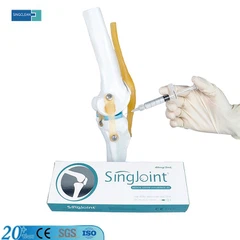
Highlighting Our Product: Advanced Sodium Hyaluronate Gel (Knee Viscosupplement)
At Singclean, our Viscosupplement Injection for Orthopedics is engineered with medical-grade sodium hyaluronate gel designed to optimize viscoelastic restoration in osteoarthritic knees. While many products only transiently boost synovial fluid volume, our formulation focuses on:
Elevated molecular weight and tailored viscoelastic profile, aimed at best simulating healthy synovial fluid rheology.
Consistent quality and purity, leveraging controlled manufacturing processes to minimize immunogenicity and enhance tolerability.
Clinical utility across mild to moderate OA, making it suitable for both primary interventions and repeated treatment courses.
You can explore the full product specifications and clinical positioning here:

Viscosupplement Injection for Orthopedics (Knee Gel Injections for Arthritis)
Our HA gel supports clinics and distributors in delivering evidence-aligned viscosupplementation therapy with clear advantages in product quality and patient experience.
Clinical Considerations and Best Practices
Patient selection remains critical: viscosupplementation generally shows greater efficacy in patients with mild to moderate OA and less so when advanced structural damage (bone-on-bone) is present. Combining HA injections with physical therapy and conservative management can further optimize outcomes.
Injection protocols vary by product, but most regimens involve weekly intra-articular injections over multiple weeks, with effects building progressively rather than instantaneously-typically becoming most prominent 4–6 weeks post-initiation.
Conclusion & Call to Action
For medical distributors and orthopedic clinics targeting improved outcomes in knee osteoarthritis, hyaluronic acid for joints remains a scientifically supported intervention that addresses the underlying rheological deficits in OA. By focusing on viscoelastic quality restoration and leveraging high-grade formulations like Singclean's sodium hyaluronate gel, practices can enhance both clinical results and patient satisfaction.


