


Understanding Adhesion Barrier Products
Postoperative adhesions remain a major clinical concern following abdominal, pelvic, and orthopedic surgeries. The goal of adhesion barrier products is to provide a temporary physical separation during the critical healing period without disrupting normal tissue repair.
Currently, there are three main types of adhesion barrier products: films, powders/liquids, and gels. However, a common clinical question is: "Which type is best for my specific surgical scenario?"
To help you make a quick, informed decision, we first present a high-level comparison of their key characteristics.

Film-Type Adhesion Barriers
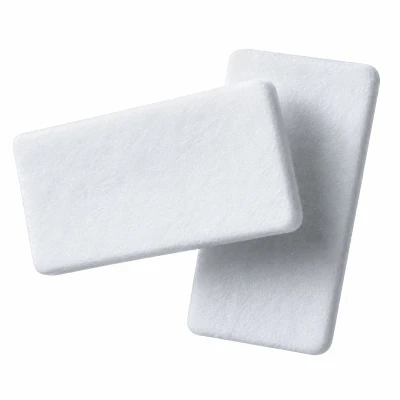
Film-based barriers are thin, bioabsorbable membranes made from materials like hyaluronic acid, carboxymethylcellulose (CMC), or polylactic acid (PLA). They act as a physical separator.
Updated Limitation: Besides the well-known difficulties in MIS and wet environments, recent research indicates that while traditional films reduce adhesion scores in severe models, they may be less effective in mitigating fibrosis compared to newer gel materials.
Latest Research Direction (New: Demonstrates cutting-edge awareness): Ongoing research in tissue engineering is developing composite films. For example, a 2024 study published in the International Journal of Biological Macromolecules found that a novel HA/GG/HPMC composite film exhibited more durable degradation and better mechanical matching in a rat Achilles tendon repair model. This suggests future films may solve current limitations through advanced material composites.
Powder-Type Adhesion Barriers
Powder barriers, often made from modified starch or oxidized regenerated cellulose, are dispersed over the surgical site using an applicator.
Key Clinical Considerations (New: Crucial decision-making points):
The main advantage of powders is ease of use, especially in laparoscopy. However, two points are critical to consider:
Retention in Wet Environments: Some powders can be washed away by irrigation or bleeding. Their effectiveness is highly technique-dependent.
Potential Impact on Healing Environment: The degradation byproducts of certain powder materials can locally alter pH or absorb excessive exudate, which could theoretically interfere with optimal tissue healing. This requires caution in critical healing zones like bowel anastomoses.
Gel-Type Adhesion Barriers
Gel barriers represent the next generation of anti-adhesion solutions. Typically based on sodium hyaluronate or cross-linked hyaluronic acid, these gels provide uniform coverage even in deep or irregular cavities. Their viscous and transparent nature allows surgeons to visualize the tissue surface while applying the product precisely. Unlike films or powders, gels adapt easily to any contour, ensuring a consistent protective layer that remains in place during the critical healing phase.
One of the leading examples of gel-type adhesion barriers is the Singclean® Hyaluronic Acid Anti-Adhesive Gel.

This patented absorbable barrier provides optimal viscosity, biocompatibility, and complete biodegradation without immunogenic response. It is designed for abdominal, pelvic, and gynecological surgeries to minimize adhesion formation effectively.
Comparative Analysis: Films vs. Powders vs. Gels
When comparing the three barrier types, gels consistently demonstrate superior adaptability and patient outcomes. While films provide structural strength and powders offer ease of dispersion, gels deliver both flexibility and stability. Gels adhere well to moist tissue surfaces, maintain their position, and gradually degrade at an appropriate rate. Clinical evidence also supports their high safety profile, as hyaluronic acid-a natural component of human connective tissue-enhances wound healing while reducing inflammation.
| Feature | Film-Type Barriers | Powder-Type Barriers | Gel-Type Barriers (e.g. Singclean® HA Gel) |
|---|---|---|---|
| Main Composition | Carboxymethylcellulose (CMC), Polylactic acid (PLA), Hyaluronic acid | Starch-based polymers, Oxidized regenerated cellulose | Sodium hyaluronate, Cross-linked hyaluronic acid |
| Form & Application | Thin bioabsorbable membrane applied over tissue surfaces | Fine powder dispersed over surgical area | Viscous, transparent gel applied evenly on tissue |
| Ease of Use | Moderate – may require fixation or hydration | Easy to disperse but depends on technique | Very easy – adapts to any contour and moist surface |
| Suitability for Minimally Invasive Surgery | Limited – difficult to place through small incisions | Good – can be sprayed or scattered laparoscopically | Excellent – injectable and spreadable in confined areas |
| Coverage Consistency | May not conform to irregular areas | Risk of uneven or incomplete coverage | Provides uniform coverage even in deep or irregular cavities |
| Performance in Moist Conditions | May lose adhesion under moisture | Effectiveness depends on moisture level | Adheres well to moist tissue, remains stable |
| Degradation & Absorption | Predictable, but may detach prematurely | May degrade unevenly | Controlled degradation with high biocompatibility |
| Biocompatibility | Good | Variable, depends on material | Excellent – hyaluronic acid is naturally biocompatible |
| Surgical Visibility | Opaque or semi-transparent | Opaque | Transparent – allows full visualization during application |
| Clinical Effectiveness | Effective on flat, accessible surfaces | Effective but technique-sensitive | Highly effective with superior patient outcomes |
| Best Use Cases | Open abdominal or pelvic surgeries | Laparoscopic or irregular surfaces | Abdominal, pelvic, gynecological, and orthopedic surgeries |
| Key Advantages | Structural integrity, physical separation | Flexible application over large areas | High adaptability, stability, and healing promotion |
| Limitations | Difficult handling, reduced adhesion in wet areas | Inconsistent coverage, may affect local healing | Higher cost but best overall performance |
Conclusion
In conclusion, while all adhesion barrier products serve the same ultimate purpose-reducing postoperative adhesions-their performance varies significantly by form. Gel-type barriers, such as Singclean's Hyaluronic Acid Anti-Adhesive Gel, offer unmatched ease of use, biocompatibility, and efficiency, making them a preferred choice for modern surgical procedures. As surgical techniques evolve toward minimally invasive operations, gel-based adhesion barriers are expected to become the industry standard for reliable adhesion prevention.

About Singclean Medical
Hangzhou Singclean Medical is a leading manufacturer specializing in biomedical materials and medical devices. With a strong focus on innovation and quality, Singclean provides products such as sodium hyaluronate gels, hemostatic materials, and anti-adhesion solutions designed to enhance surgical outcomes and patient recovery. Learn more at http://www.singclean.org/.
FAQ
Q: Which is better, hyaluronic acid anti-adhesive gel or film?
A: There's no absolute "better"-it depends on the surgery. However, high-quality evidence supports that gels show superior coverage and more reliable adhesion reduction in laparoscopic procedures and on irregular surfaces (like the liver or uterus).
Q: Are adhesion barrier products absorbed by the body? Is a second surgery needed for removal?
A: Yes, all modern mainstream adhesion barriers (films, powders, gels) are made of absorbable materials. They fully degrade via hydrolysis or enzymatic action over days to weeks and are safely metabolized or excreted. No second surgery is required for removal.
Q: Can using an anti-adhesive gel affect wound healing or cause infection?
A: High-quality medical-grade HA gel not only provides a physical barrier but some studies suggest it may promote healing by modulating inflammation. As long as the product is sterile and free from harmful additives, it does not increase infection risk and has no negative impact on healing.