




Introduction
Knee osteoarthritis (OA) is one of the most common forms of degenerative joint disease worldwide and continues to create substantial clinical and economic burdens for healthcare systems. As aging populations grow and obesity rates rise, orthopedic clinics, hospitals, and pain management centers are seeing increasing demand for non-surgical treatment solutions that can help manage pain, maintain mobility, and delay joint replacement procedures.
Among available knee osteoarthritis injection treatment options, two intra-articular approaches are frequently discussed: hyaluronic acid (HA) injection and corticosteroid injection knee therapy. Both are widely used in orthopedic practice, yet they work through distinctly different mechanisms and offer different clinical outcomes.
For physicians and procurement professionals, choosing an injection strategy often involves balancing immediate symptom control, duration of pain relief, patient safety, repeat treatment considerations, and long-term joint preservation goals.
Patients frequently ask: Which is better HA or steroid injection for knee OA? The answer is often more nuanced than a simple comparison. Treatment selection should be individualized according to disease stage, inflammatory status, patient comorbidities, and physician assessment.
This article explores the clinical differences, advantages, and limitations of HA injection versus corticosteroid injection to support informed decision-making.

What Is an HA Injection?
A hyaluronic acid injection is an intra-articular treatment used primarily for patients with knee osteoarthritis. Hyaluronic acid, often formulated as Sodium Hyaluronate, is a naturally occurring component of synovial fluid, responsible for joint lubrication and shock absorption.
In osteoarthritis, synovial fluid quality changes significantly:
Reduced HA concentration
Lower molecular weight
Decreased viscoelastic properties
Increased friction within the joint
This has led to the development of viscosupplementation, a therapeutic strategy designed to restore the mechanical properties of synovial fluid.

The mechanism of HA injection may include:
Supplementing depleted synovial fluid
Improving knee joint lubrication
Reducing friction between articular surfaces
Supporting shock absorption
Potential modulation of inflammatory pathways
Possible cartilage protective effects
Typical indications include:
Mild-to-moderate knee osteoarthritis
Chronic knee pain
Patients seeking non-surgical osteoarthritis treatment options
Individuals unsuitable for long-term NSAID use
A gel injection for knee pain is often considered part of long-term conservative management strategies.
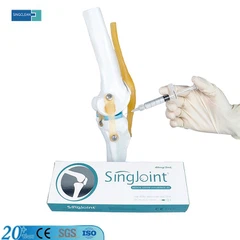
For healthcare providers seeking clinically focused viscosupplementation products, Singclean offers specialized orthopedic sodium hyaluronate solutions designed for intra-articular use:
Learn more: Singclean Hyaluronic Acid Injection Solutions
What Is a Corticosteroid Injection?
A corticosteroid injection knee treatment is designed primarily to suppress inflammation and provide rapid symptom relief.
Unlike HA, corticosteroids do not restore synovial fluid mechanics. Instead, they reduce inflammatory mediator activity inside the joint.
Potential mechanisms include:
Suppression of inflammatory cytokines
Reduction of synovial inflammation
Decreased swelling
Reduced pain signaling
Common clinical scenarios include:
Acute OA flare-ups
Significant synovitis
Joint effusion
Severe short-term pain episodes
The primary advantage is speed. Many patients experience symptom improvement within several days after injection.
However, corticosteroids can have potential adverse effects that require consideration:
Commonly discussed limitations
Temporary injection-site pain and swelling
Potential cartilage and nearby bone damage with repeated use
Skin thinning or discoloration
Temporary increases in blood glucose levels
Mood or hormonal changes in some patients
Patients with conditions such as:
Diabetes
Hypertension
Compromised immune systems
may require additional physician evaluation before treatment.
Repeated corticosteroid exposure has also raised concerns regarding long-term cartilage health.
Comparison of HA Injection vs Corticosteroid Injection
| Comparison Factor | HA Injection | Corticosteroid Injection |
|---|---|---|
| Mechanism | Synovial fluid supplementation and lubrication | Anti-inflammatory suppression |
| Duration of effect | Approximately 3–6 months | Usually several weeks |
| Pain relief | Gradual improvement | Rapid symptom reduction |
| Cartilage protection | Potential supportive effect | Concerns with repeated use |
| Repeat use | Generally suitable | Frequency often limited |
| Systemic side effects | Lower systemic exposure | May affect glucose and hormones |
| Suitable patients | Mild–moderate OA | Acute inflammatory symptoms |
| Long-term benefit | Longer symptom management potential | Primarily short-term symptom control |
Pros of HA Injection
1. Longer-Term Symptom Relief
Compared with steroid injections, viscosupplementation may provide symptom improvement lasting several months after treatment.
Patients often report:
Progressive pain reduction
Better functional mobility
Sustained symptom control
This longer duration can reduce treatment frequency.
For example, Singjoint's treatment effects can last up to 6 months while Singjoint Plus can last for more than 6 months.

2. Supports Joint Lubrication
HA restores viscoelastic properties of synovial fluid and improves movement within degenerative joints.
Improved lubrication may contribute to:
Reduced friction
Better movement mechanics
Lower mechanical stress
3. Potential Cartilage Protective Role
Some studies suggest HA may influence:
inflammatory mediators
cartilage metabolism
extracellular matrix preservation
While evidence continues to evolve, this mechanism has generated significant clinical interest.
4. Lower Systemic Effects
Because HA primarily remains within the joint space, systemic exposure is generally limited.
This may benefit patients seeking alternatives to therapies associated with broader physiological effects.
5. Suitable for Repeat Treatment Strategies
Repeat viscosupplementation cycles are commonly used in orthopedic practice and may fit long-term management approaches.
Cons of HA Injection
Cost Considerations
HA formulations can vary significantly in:
molecular weight
injection schedules
Costs may therefore be higher than corticosteroid options.
Individual Response Variation
Clinical outcomes can vary depending on:
OA severity
joint condition
patient characteristics
inflammatory status
Not all patients experience the same level of benefit.
Pros of Corticosteroid Injection
1. Rapid Pain Relief
Fast symptom reduction remains one of the biggest advantages of corticosteroids.
This can be especially useful during acute OA episodes.
2. Effective for Inflammatory Symptoms
Patients presenting with:
synovitis
joint swelling
inflammatory flare-ups
may experience meaningful short-term improvement.
3. Lower Immediate Cost
Corticosteroid therapies are generally more affordable and broadly available.
4. Familiarity in Clinical Practice
Orthopedic physicians and pain specialists have extensive experience with corticosteroid use.
5. Convenient Short-Term Management
For temporary symptom stabilization, corticosteroids can provide practical relief while broader treatment plans are considered.
Cons of Corticosteroid Injection
Short Duration of Action
Pain relief often diminishes after several weeks.
Repeat interventions may become necessary.
Concerns with Repeated Use
Frequent injections are generally approached cautiously.
Many physicians limit injection frequency.
Potential Cartilage Damage Risk
Repeated corticosteroid exposure has been associated with concerns regarding cartilage integrity.
Metabolic Effects
Possible systemic effects include:
elevated blood glucose
blood pressure changes
hormonal fluctuations
Particular caution may be needed for patients with diabetes.
Clinical Decision: Which Patients May Benefit More?
Early Osteoarthritis
Patients with mild degenerative changes and preserved cartilage may benefit from:
HA injection
viscosupplementation strategies
long-term symptom management
Moderate Osteoarthritis
Treatment selection may depend on:
pain severity
inflammation level
previous treatment response
Combination treatment pathways are sometimes considered.
Severe Osteoarthritis
Advanced structural degeneration may reduce response to HA alone.
Surgical evaluation may eventually become appropriate.
Acute Inflammatory Symptoms
Patients experiencing:
severe swelling
inflammatory flare
intense pain
may initially benefit from corticosteroid injection approaches.
Future Trends in Knee Injection Therapy
The knee pain injection field continues to evolve.
Emerging directions include:
Cross-Linked Hyaluronic Acid
Advanced formulations may provide:
increased residence time
improved viscoelastic performance
prolonged symptom control
Single-Shot Formulations
Single-injection products continue to gain interest because they may improve:
patient convenience
compliance
clinic workflow efficiency
Combination Therapy Approaches
Some clinicians are exploring sequencing strategies involving:
corticosteroid plus HA
platelet-rich plasma combinations
personalized treatment pathways
Regenerative Medicine
Emerging technologies include:
biologic injections
cellular therapies
tissue engineering strategies
Long-term evidence remains under investigation.
Clinical Perspective and Guideline Considerations
Organizations such as the American Academy of Orthopaedic Surgeons and Osteoarthritis Research Society International emphasize individualized treatment planning in osteoarthritis management.
Clinical guidelines generally recognize that no single intervention is universally appropriate for every patient.
Physicians often evaluate:
disease severity
inflammatory findings
comorbidities
previous treatment response
patient expectations
when selecting knee injection alternatives.
FAQ
Q: Are HA Injections Better Than Cortisone Shots?
A: Not necessarily. HA and corticosteroids serve different purposes. HA often focuses on longer-term viscosupplementation, while corticosteroids are commonly used for rapid inflammation control.
Q: How Long Do HA Injections Last?
A: Many patients experience symptom relief for approximately three to six months, although outcomes vary.
Q: Can Both Treatments Be Combined?
A: Some clinicians use corticosteroids initially for inflammation control followed by HA therapy later.
Q: Are Gel Injections Safe?
A: HA injections are generally considered well tolerated, although local injection reactions may occur.
Q: How Often Can Steroid Injections Be Repeated?
A: Injection frequency varies by physician and patient condition. Repeated use often requires careful assessment.
Q: What Are Common Side Effects?
A: HA commonly causes localized swelling or discomfort. Corticosteroids may also involve metabolic or systemic effects.
Q: Which Option Is More Suitable For Hospitals?
A: Selection depends on patient population, clinical protocols, and treatment goals.
Q: Is Viscosupplementation Widely Used?
A: Yes. Viscosupplementation remains a recognized option in many orthopedic and sports medicine practices.
conclusion
The comparison between HA Injection vs Corticosteroid Injection highlights two distinct therapeutic approaches within knee osteoarthritis management.
Corticosteroid injections often provide rapid symptom control and acute inflammation management. HA injections, by contrast, focus on restoring synovial fluid function and supporting longer-term symptom management through viscosupplementation.
Neither option should be viewed as universally superior. Treatment decisions should be based on physician assessment and patient-specific conditions, including disease severity, inflammation status, treatment goals, and clinical history.
As knee osteoarthritis treatment continues evolving, personalized care strategies will likely become increasingly important.
Learn More
Healthcare providers, distributors, and orthopedic specialists seeking advanced hyaluronic acid injection solutions can explore Singclean's viscosupplementation portfolio for knee osteoarthritis management.
Learn more about hyaluronic acid injection solutions for knee osteoarthritis:
Singclean Orthopedic HA Injection Portfolio


